A birth chart is a map of the sky for one moment and one place: the moment you were born, and where it happened. Astrologers read it as a symbolic structure of planets, signs and houses. This guide explains what a chart shows, why its exact time and place matter, a short history of the tradition, and a calm way to read one without treating it as a verdict on your life.
What a birth chart shows
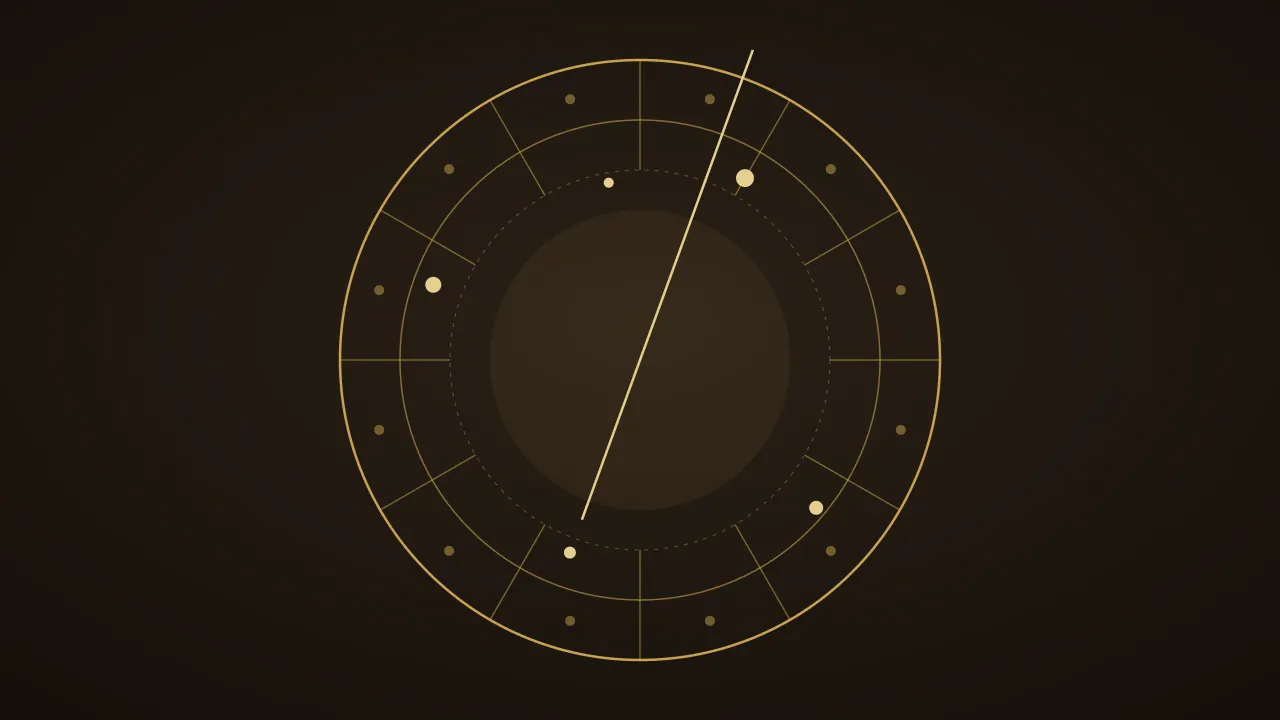
A natal chart, the usual name for a birth chart, places the Sun, the Moon and the planets for your birth moment. Each planet sits in a sign, a thirty-degree band of the zodiac, and in one of twelve houses, which divide the chart around the horizon and the sky above it. The chart also draws angles between planets, called aspects, which astrologers read as relationships between themes.
Our services
Private 1:1 Tarot Reading with Fardous
Direct, personal, and focused clarity on your most pressing question.
The result is a wheel, and the shape is the point. A chart is an arrangement to read, not a sentence to obey. The tradition gives each part a meaning, and the reader decides how those meanings apply to a question. The birth chart tool on this site calculates the Sun, the Moon, the rising sign and the planetary placements across Placidus houses, each with an interpretation.
Why the exact time and place matter
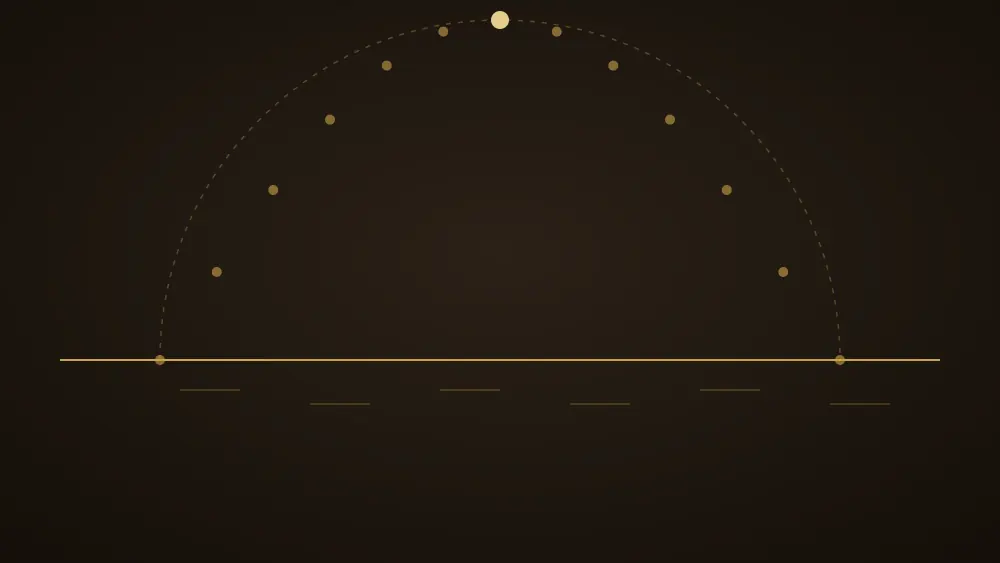
The Sun's sign depends only on the date. The rising sign, called the ascendant, depends on the time and the place. As the Earth turns, a different part of the zodiac rises on the eastern horizon. A sign takes about two hours to rise, so the ascendant changes roughly every two hours, and the houses change with it. The Moon moves faster: it changes sign about every two to three days, so its placement can shift within a single day.
This is why a chart needs your birth date, your exact birth time and your birthplace. Two people born on the same day can have different rising signs and different houses if they were born at different hours, or in different cities. A chart calculated without a reliable time can still show the Sun and the Moon approximately, but the rising sign and the houses are not reliable.
Our services
Private 1:1 Tarot Reading with Fardous
Direct, personal, and focused clarity on your most pressing question.
Astrology is much older than the birth chart. Babylonian scholars recorded celestial omens for centuries, reading the sky for signs about rulers and the land. Babylonian astrology had reached Greece by the mid-fourth century BCE. The tradition that matters most for birth charts is horoscopic astrology, which emerged in the Hellenistic world. It combined Babylonian astronomy with the Egyptian decan system, and it built charts around the ascendant, the horoskopos or "hour marker", and the twelve houses derived from it. According to the overview of Hellenistic astrology, this horoscopic system took shape around the late second or early first century BCE, in Alexandria, and placed a new focus on the individual's natal chart.
That history explains the structure you see today. The ascendant and the houses were added to a sky-reading tradition in order to describe a person's situation at birth. Since then the tradition has changed many times, and different schools use different house systems and different rules of interpretation. There is no single chart that every astrologer would accept.
Three points to begin with
A full chart has many points, and reading them all at once is hard. Most readers begin with three:
The Sun, which the tradition links to core identity and the way you express yourself.
The Moon, which it links to emotional habits and what you need in order to feel secure.
The rising sign, which it links to the way you meet the world and first appear to others.
These three are a starting point, not a complete picture. Read one at a time, and write down what each one describes in your own life, not only what a book says about it.
How to read a chart without fatalism
A chart can give you structure and a vocabulary. It should not be used to decide who you are or what you may do. A method that keeps the reading useful:
Write one question before you look at the chart. "What does my Moon suggest about how I handle stress this month?" is clearer than "What does my chart say about my life?"
Read one placement at a time, then ask which description matches something you can actually see.
Keep the decision with yourself. A chart may describe a tendency. It cannot choose for you, and it must never be used to justify harm to yourself or to someone else.
What a chart cannot do
A chart cannot predict specific events with certainty. It cannot read another person's mind, and it cannot tell you what a partner's chart means for your relationship unless you have both charts and a clear question. It is not a medical, psychological, legal or financial assessment. If a reading leaves you anxious, hopeless or unable to decide, speak with someone you trust, and consider a qualified professional. If you feel unsafe, contact your local emergency services.
Our services
Private 1:1 Tarot Reading with Fardous
Direct, personal, and focused clarity on your most pressing question.
To calculate your chart, you need your exact birth date, your birth time and your birthplace city. The birth chart tool uses those details to place the planets and to show the rising sign and the houses. If you do not know your birth time, the rising sign and the houses will be less reliable, and a responsible reading should say so.
If you would rather go through a chart with a person who can talk through your question with you, the private readings are one-to-one sessions.
Common questions
Is my birth chart the same as my horoscope?
No. A horoscope for your sign is a general text written for everyone born under that sign. A birth chart uses your date, time and place to calculate a personal arrangement of planets and houses.
Do I need my exact birth time?
For the Sun sign, no. For the rising sign and the houses, yes. Without a reliable time the chart is less precise, and a responsible reading will say so.
Can two people born on the same day have the same chart?
Not exactly. The Sun is similar, but the Moon can change within a day, and the rising sign changes about every two hours. Twins born minutes apart can have different rising signs.
Does a chart predict my future?
Not with certainty. A chart is a symbolic framework that can help you reflect on patterns. Treat its statements as things to test, and keep the decisions with yourself.
Our services
Private 1:1 Tarot Reading with Fardous
Direct, personal, and focused clarity on your most pressing question.
Read the chart as a question, and your life as the answer
A birth chart gives you a structure to think with: the Sun, the Moon, the rising sign, and the houses that frame them. Use it to ask better questions, read one point at a time, and check the reading against what happens. A chart can help you reflect. It cannot decide your life for you.
The short version
•A birth chart places the Sun, the Moon and the planets for one moment and one place, in signs and twelve houses.
•The Sun's sign needs only the date. The rising sign and the houses need an exact time and place, because the rising sign changes about every two hours.
•Horoscopic charts with an ascendant and twelve houses took shape around the late second or early first century BCE, in Alexandria.
•Start with three points: the Sun, the Moon and the rising sign. Read one at a time, and test the reading against what happens.
•A chart is a symbolic framework. It is not a forecast of fixed events, and it cannot make a decision for you.