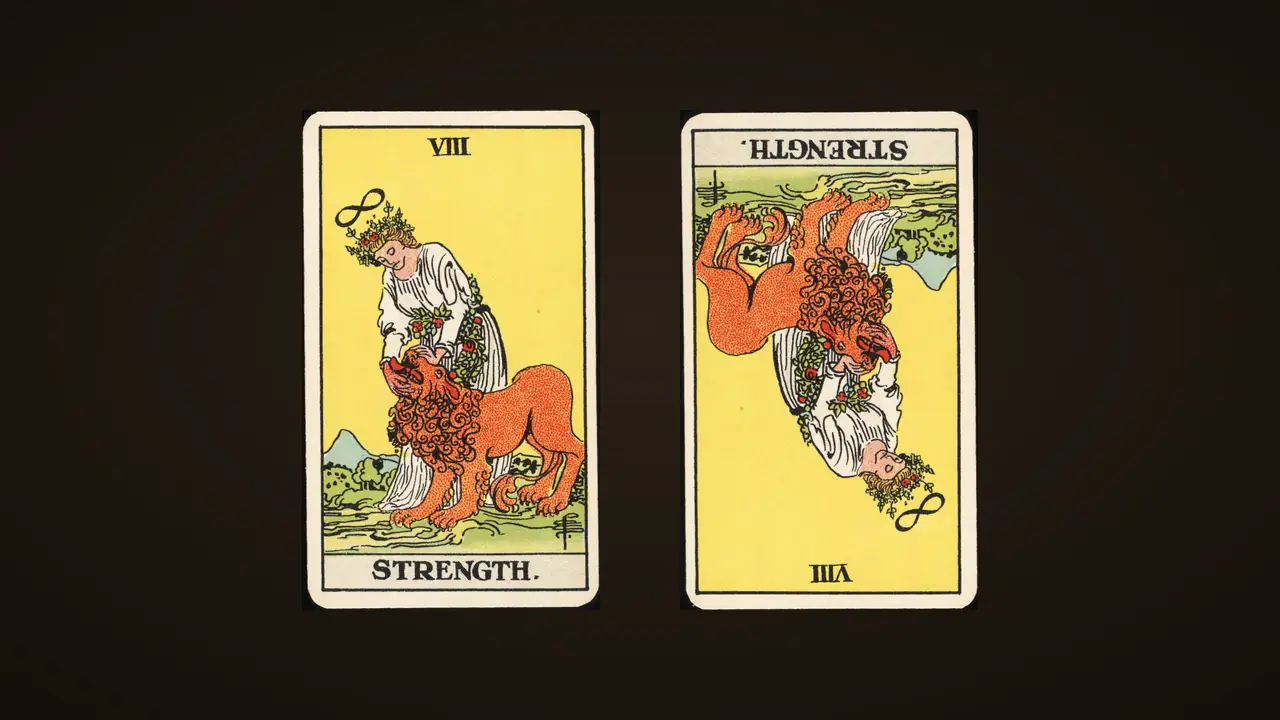
Many readers treat a card that falls upside down as a different card. The same image, turned around, is given another meaning. Whether you should do this is a choice of convention, not a fact the cards settle. This guide explains where reversed meanings come from, the three common ways readers handle them, and how to choose one rule and keep to it.
What a reversed card means
When a card lands upside down, many readers change its meaning. In the Waite–Smith tradition the book gives every card a reversed reading. For the Ace of Pentacles, Waite's reversed meaning turns to the darker side of wealth (Waite's card entries, Sacred Texts). For the Two of Wands, the reversed meanings centre on surprise and fear rather than on the upright reading's sense of choice.
Our services
Private 1:1 Tarot Reading with Fardous
Direct, personal, and focused clarity on your most pressing question.
These entries are useful as a primary source. They show how one influential author handled reversals in 1911. They are not measurements, and later manuals do not always agree with them.
Where the convention comes from
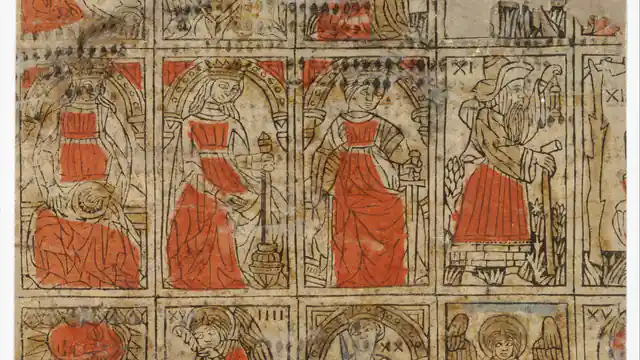
Tarot began as a set of playing cards in northern Italy in the fifteenth century, and for centuries it was used mainly for games. The divinatory practice that gives meaning to a card's position in a reading came later, and it is there that reversed meanings belong (Wikipedia, Tarot of Marseilles). A card game does not need to know whether a card lies upright or upside down. A reading does, because the reader has chosen to make orientation part of the reading.
That is why reversed meanings are a convention, not something the card itself settles. Each tradition, and each reader, can make a different choice, and each choice should be explicit.
Three ways readers handle reversals
Read the opposite. A reversed card means the reverse of its upright meaning. Where the upright card is open, the reversed one is blocked; where it is quick, the reversed one is delayed. This is easy to remember, and it can feel harsh when the upright meaning was already difficult.
Read the energy inward or held back. The card's energy is turned inward, or kept back from being used. Many readers find this gentler: a reversed card becomes a card whose energy needs attention, not one that says no.
Read upright cards only. Ignore orientation and read every card as it lies. It is the simplest rule, and it removes one variable from the reading altogether.
None of these is proven, and none is wrong in the sense of being false. Each is a convention. The useful question is which one you will use, and whether you will use it consistently.
Our services
Private 1:1 Tarot Reading with Fardous
Direct, personal, and focused clarity on your most pressing question.
The reversal rule matters most at one moment: when a card you dislike appears and you feel tempted to switch rules. Decide the rule before you draw, write it at the top of your notes with the date, and keep to it. If you change the rule in the middle of a session, you are no longer reading the cards. You are choosing the answer you prefer.
A worked example
Suppose your question is: "What do I need to see about my work this month?" You draw the Two of Wands reversed. Under the opposite rule, you might read "a surprise that turns into fear". Under the inward rule, you might read "a sense of wonder that is being held back". Under the upright-only rule, you read the card as it lies: two paths and a wand.
Each reading points to a different next step. The skill is not in choosing the most comfortable one. It is in writing down the one rule you used, and then checking the step it suggests against your week, as the guide to what tarot can and cannot tell you explains.
Mistakes to avoid
Changing the rule after the draw. It turns a reading into a search for a favourable answer.
Reading a reversal as bad luck. A reversed card is a prompt to examine a pattern. It is not a forecast.
Using reversal as a severity scale. A reversed card does not mean that a situation is twice as bad as the upright one.
Counting reversals without a rule. If you count them, decide in advance how the count will be read. The yes or no method shows how much a counting rule can change the result.
When a reversed card worries you
If a reversed meaning raises fear, pause. A reading is a prompt for reflection, not a verdict. If the fear lingers, talk to someone you trust. If you feel unsafe, contact your local emergency services. For ongoing distress, speak with a qualified professional.
Common questions
Do I have to read reversed cards?
No. Reading upright cards only is a legitimate convention. What matters is that you choose it and keep to it.
Our services
Private 1:1 Tarot Reading with Fardous
Direct, personal, and focused clarity on your most pressing question.
Under one convention, yes. Under others, it means something inward, delayed or held back. Waite's book gives reversed meanings, but readers do not all use them the same way.
How do I know whether a card is reversed?
Use the orientation the card lands in, by a convention you write down before the draw, for example the way it lies when you turn it face up. Be consistent. The rule about orientation matters more than the method you use.
Is a reversed card a warning?
Not in itself. Treat it as a prompt to look at a pattern in your situation, and check whether the pattern is really there.
Keep the rule, check the reading
Choose your reversal rule before you draw, write it down, and use it every time. Then test the reading against what happens, as described in the guide to what tarot can and cannot tell you. The rule is yours. The cards illustrate it.
If you want to try a draw before you decide on a rule, the tarot tool lets you do that in your browser.
The short version
•A reversed meaning is a convention of divinatory practice. Waite's 1911 book gives one for every card, but readers differ.
•Three common approaches: read the opposite, read the energy turned inward or held back, or read upright cards only.
•Choose your rule before the draw, write it down with the date, and use the same rule every time.
•Changing the rule after a card you dislike turns the reading into a choice of answer, not a reading.
•A reversed card is a prompt for reflection, not a warning or a measure of how bad things are.