Sometimes a room feels heavy before you can explain why. You may associate it with an argument, a difficult period or a pile of unfinished jobs. Calling that feeling negative energy can express something real about your experience, but it does not identify a single cause. Before buying a cleansing service, look at what you can notice and change: air, light, noise, objects that block a task and the way people share the space.
This is a practical home reset, not a promise to remove a curse or a substitute for investigating a safety problem. The generated illustrations show calm settings to help explain the ideas. You do not need a large house, matching furniture or a particular spiritual tradition. A useful change should work in the home you actually have.
Separate the feeling from the explanation
Describe the room without judging it. The table is covered with unopened mail; the television stays on while I work; we argue about dishes after dinner. These descriptions suggest actions. This room is cursed does not tell you which letter needs answering, whether the sound can be lowered or what agreement the household needs. You can acknowledge discomfort without deciding that the first explanation is the correct one.
Our services
Private 1:1 Tarot Reading with Fardous
Direct, personal, and focused clarity on your most pressing question.
Pick one recurring moment rather than the whole home. Where does the day catch: finding keys, preparing a meal, settling down to sleep or returning from work? Choose the change that would make that moment easier. If you share the room, ask what others notice before moving their belongings. A reset that creates conflict or removes somebody's useful arrangement may look tidier while making the home harder to live in.
Start at the entrance with a place for returning things
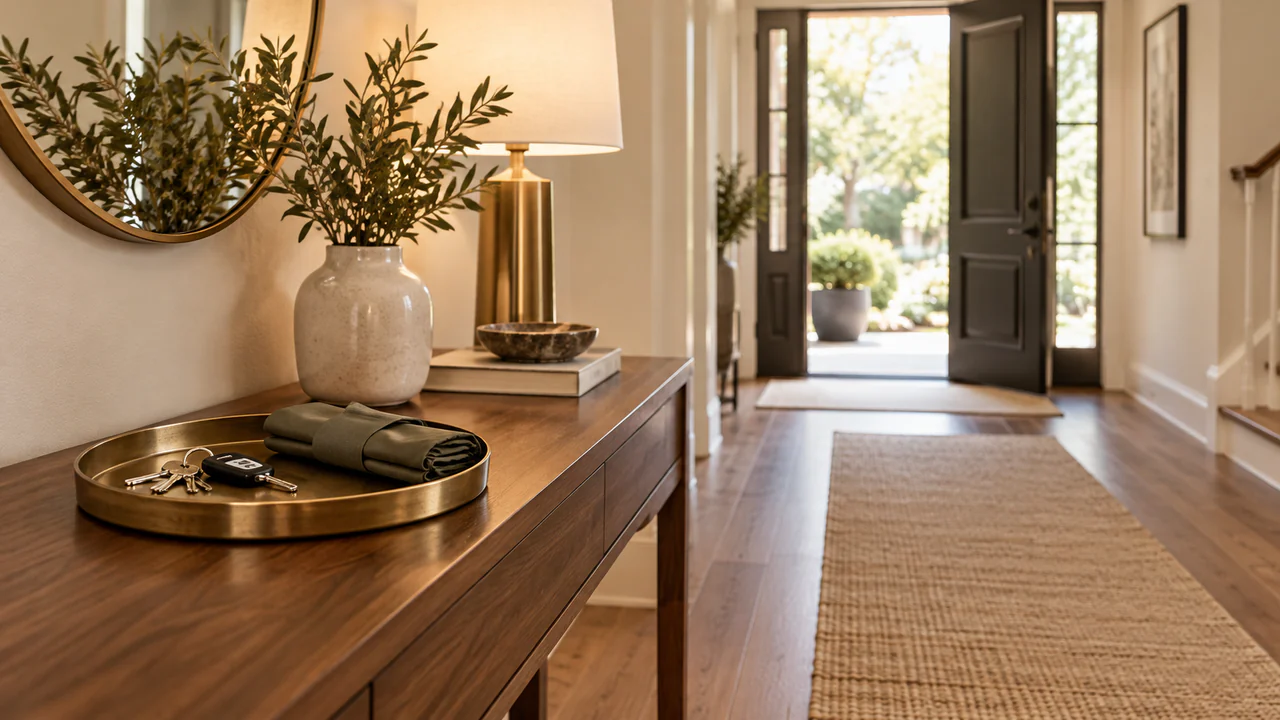
An entrance often collects objects because each item is waiting for a decision. Give the essentials a clear destination: keys, the bag used daily, shoes that are currently worn and outgoing items. The destination should be easy to reach and obvious to the people who use it. An ordinary tray or hook may do more than a decorative system that takes several steps to maintain.
Do a short trial before buying storage. Move only your own things, choose a place and see whether you naturally use it for several days. If you keep dropping the bag elsewhere, investigate the reason: perhaps the hook is awkward, the shelf is full or the chosen spot is too far from the door. Adjust the location rather than interpreting the repeated pile as a personal failure.
Our services
Private 1:1 Tarot Reading with Fardous
Direct, personal, and focused clarity on your most pressing question.
Keep access routes and doors usable. Do not let an attractive arrangement obstruct movement or make it difficult to leave. If you have limited space, a smaller number of accessible items is usually easier to manage than adding another piece of furniture simply to hold the overflow.
Address the air rather than covering it with a stronger smell
A fresh fragrance is not evidence that indoor air is clean. If there is a persistent smell, look for its source and deal with the appropriate maintenance issue. The US Environmental Protection Agency describes source control, ventilation and filtration as approaches to indoor air quality; ventilation decisions should take outside conditions into account. Its indoor air guidance is a useful reference.
Opening a window may suit a particular day, but it is not a universal instruction when outdoor air, weather, security or accessibility make that unsuitable. Use the ventilation options appropriate to your home and seek relevant help for persistent damp, leaks or other building problems. A ritual cannot repair a leak, and repeatedly masking a smell can delay finding what needs attention.
You do not need smoke to give a room a sense of renewal. A quiet reset can be entirely unscented. Ask the people sharing the space before adding fragrance, and respect anyone who finds it unpleasant or irritating. Shared comfort matters more than completing a symbolic sequence exactly as someone online describes it.
Clear a surface for one actual purpose
Choose a surface with a job: a place to eat, write, prepare food or put down a cup safely. Clear enough space for that job before trying to make the whole room look finished. Sort what you move into a few real destinations: something to keep nearby, something to return elsewhere and something requiring a decision. Avoid creating a new unsorted pile out of sight and calling the work complete.
If paperwork is the problem, choose a small next step for it. Open one envelope, note one deadline or place a document where it can be found. Moving every paper into a beautiful box may improve appearance without reducing uncertainty. The more useful question is whether tomorrow's task has become easier, not whether the surface now resembles a photograph.
Our services
Private 1:1 Tarot Reading with Fardous
Direct, personal, and focused clarity on your most pressing question.
Stop at a reasonable point. A ten-minute clearing session that leaves the room usable is preferable to emptying every cupboard when you do not have time to finish. Leave a clear route back into the work, so the next attempt begins with a known action rather than another large decision.
Make cleaning manageable and specific
Choose the task that matches the problem. A dusty shelf needs an appropriate cleaning method; a broken fitting needs repair; an overflowing laundry area may need a different collection routine. Treating these as separate jobs prevents a vague instruction to cleanse the home from expanding into a project with no finish. Follow product labels and instructions for the surface you are working on.
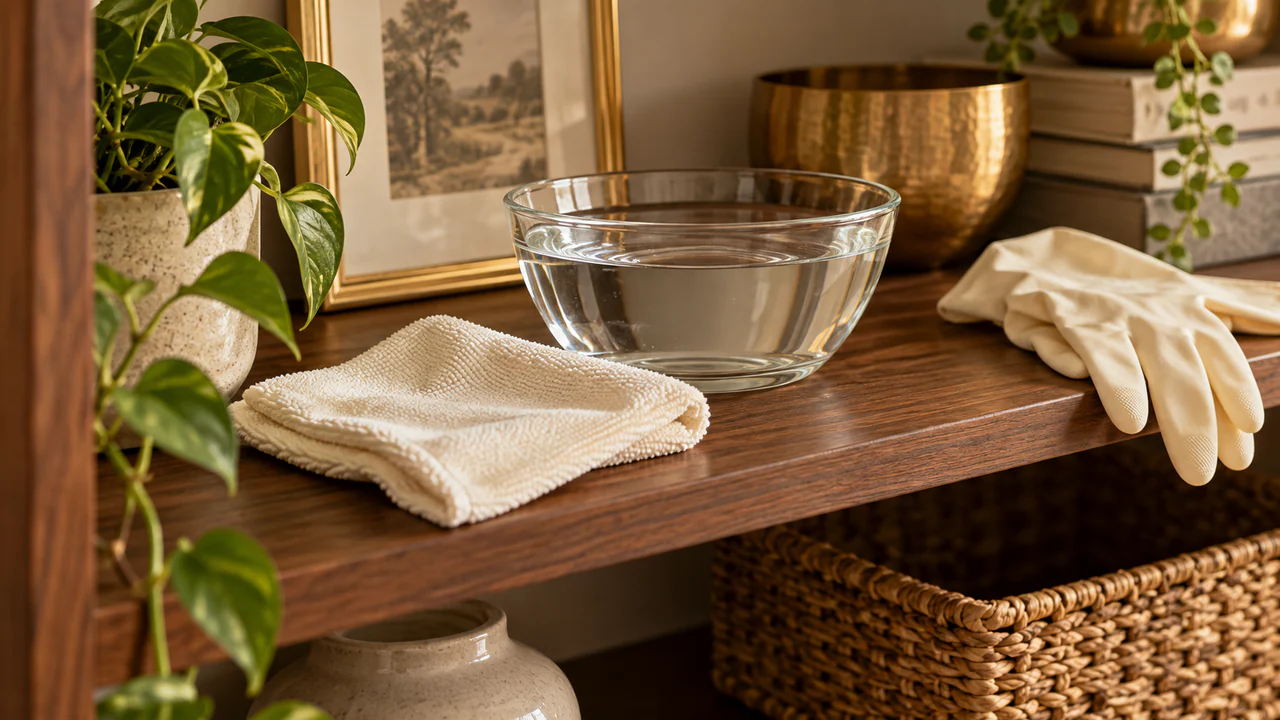
Keep supplies together if that makes the task easier, and choose a time limit that fits your energy and responsibilities. You can clean one section today and another later. Do not discard somebody else's belongings as part of a spiritual reset. Ask permission and agree on a place for shared items, especially objects with practical or sentimental value that may not be obvious to you.
Cleaning can mark a transition after a difficult period, but it does not erase the events themselves. If a room reminds you of something painful, you may prefer a gentle change in arrangement, company while sorting or help from someone you trust. There is no requirement to confront every object in one session.
Use lighting to distinguish activity from rest
Look at what each part of the room is for. The light needed to read paperwork is different from the light you may prefer while resting. Try changing the position or use of an existing lamp before buying another one. Make sure the task is visible and movement remains safe; dimness is not automatically calming when it makes a room hard to navigate.
If you work and rest in the same room, choose a small transition that signals the change of use. Close the work notebook, move the chair back or switch off the task light when it is no longer needed. This is a way of organising the space, not a claim that a particular colour temperature removes negative energy. Find the arrangement that serves the people using the room.
Avoid making comfort depend on buying a whole aesthetic. A borrowed lamp, a repaired shade or a clearer surface can be enough. The room should support your evening even if its objects do not match and it will never appear in a design magazine.
Our services
Private 1:1 Tarot Reading with Fardous
Direct, personal, and focused clarity on your most pressing question.
Agree on one shared rule that prevents a repeated argument
If the atmosphere changes after the same disagreement each day, objects may not be the main issue. Choose a calm moment to discuss one practical point: when a noisy activity happens, where shared items go or who takes responsibility for a particular task. Use a specific request rather than a diagnosis of somebody else's energy. Specific requests are easier to understand and revisit.
For example: could we leave this part of the table clear after dinner so I can work here tomorrow? This explains the action and the reason. It leaves room to negotiate a different place or time. You may not get an immediate agreement, but you have something concrete to discuss. Saying that another person contaminates the room is more likely to turn a practical difficulty into an attack on their identity.
An unfinished task can stay in the room because it has no defined next action. A basket of clothes may need sorting, mending, donating or simply returning to a cupboard. Name which one applies. Keep a small place for items awaiting action, but do not let it become a permanent container for every unresolved decision. Review it at a realistic interval.
When money or time prevents a repair, record that constraint honestly. You do not have to solve it today to stop reconsidering it every time you see the object. Note what information is missing, who needs to be contacted or when the decision can be revisited. A written next step can be more useful than moving the item between rooms.
Keep what has a real place in your life. A calmer home is not a competition to own the fewest objects, and sentimental possessions do not become negative because they complicate a minimalist photograph. The question is whether you can use the space and care for what you choose to keep.
Create a small place where no purchase is required
Choose one chair, part of a table or a comfortable corner where you can pause without immediately starting another job. It can hold a book, a notebook or nothing at all. Keep the arrangement simple enough to restore after use. A calm corner is a place you can actually sit, not another display that you must maintain for an imagined audience.
Our services
Private 1:1 Tarot Reading with Fardous
Direct, personal, and focused clarity on your most pressing question.
If you enjoy spiritual reflection, watch Fardous Nashaat on YouTube or explore the free birth chart calculator, then return to the question of what you want to do in your day. Our birth chart reading guide explains that symbolic framework. Neither a chart nor a video measures a room's safety or proves that an unseen force has been removed.
Must I use salt or burn something?
No. A practical reset can consist of arranging, cleaning appropriately, addressing air quality and agreeing on shared use. Avoid unnecessary substances and respect the needs of people and animals in the home.
What if the room still feels uncomfortable?
Review the explanation instead of escalating purchases. Is the issue noise, an unresolved disagreement, a reminder of a difficult event or a maintenance problem? Different causes need different responses. Persistent distress is a reason to seek suitable support, not evidence that you bought the wrong ritual.
How do I know the reset helped?
Look for a specific change: keys are easier to find, the table can be used, a repair is underway or an evening disagreement happens less often. These observations are more useful than a promise that the home is permanently cleared. A lived-in home needs ordinary care and revisable agreements, not a guarantee of perfect feelings.
The short version
•A heavy atmosphere is a feeling worth exploring, not proof of a supernatural cause.
•Start with one repeated annoyance and one usable surface rather than reorganising everything.
•Air quality, practical cleaning and respectful household agreements need concrete action.