An amethyst can be a lovely purchase and a confusing one. The same purple stone may be described as jewellery, a meditation companion, a sleep aid or a shield against someone else's intentions. Those descriptions do not all carry the same weight. Before buying, decide what you want to bring home: a colour you enjoy, a meaningful gift, a mineral specimen or a reminder to pause. That answer is more useful than a list of powers attached to every crystal in a shop.
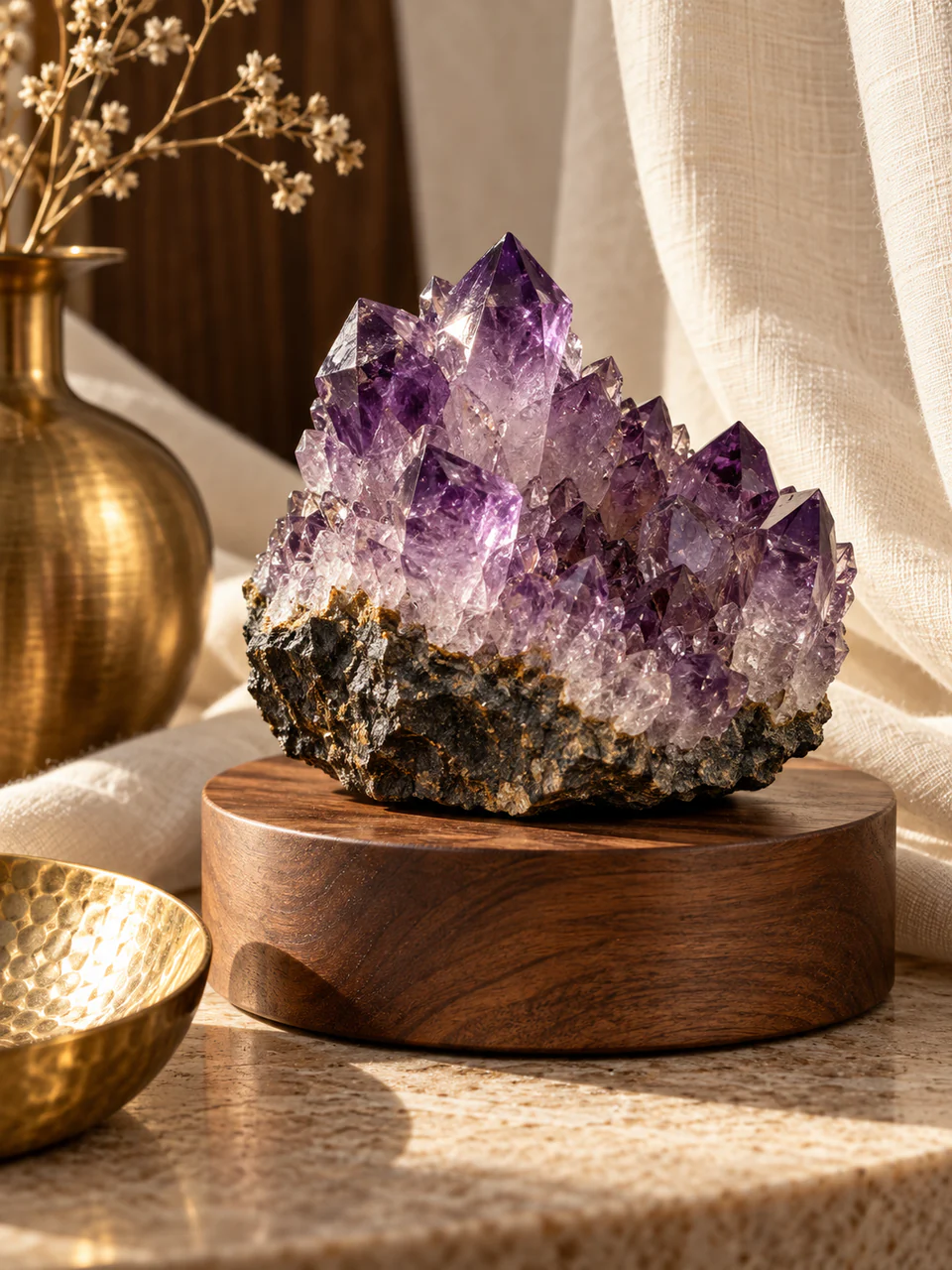
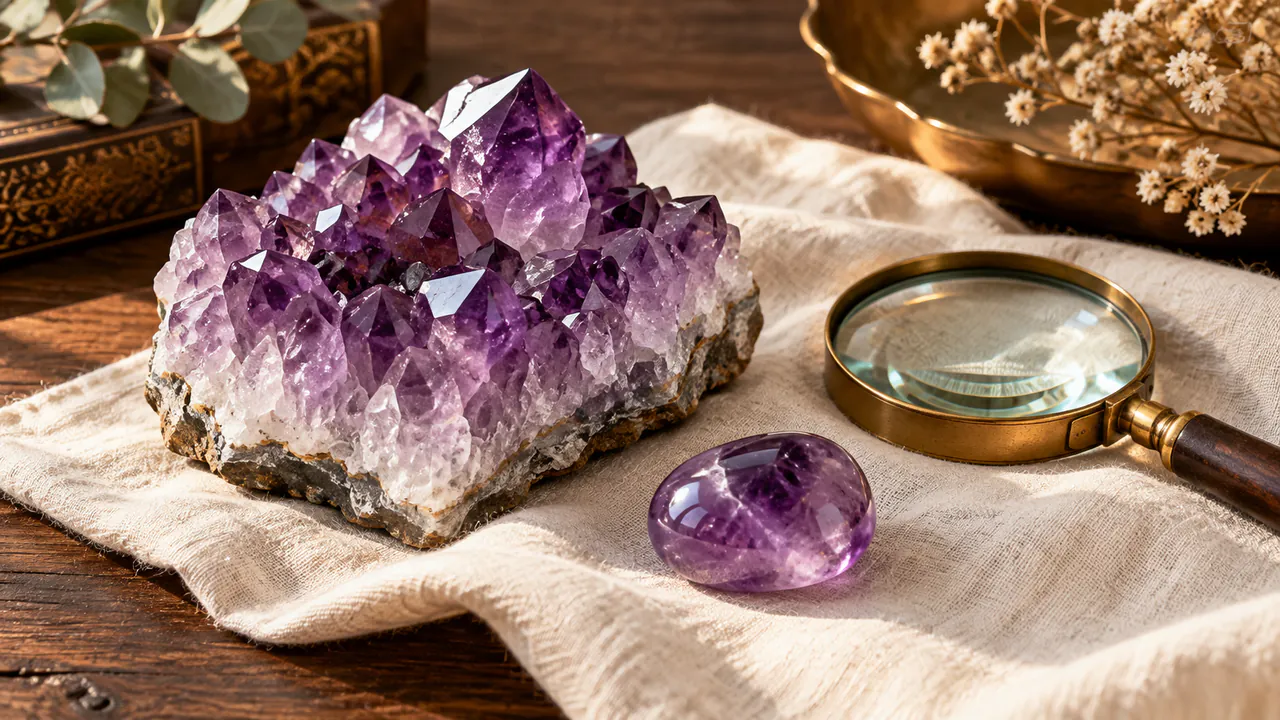
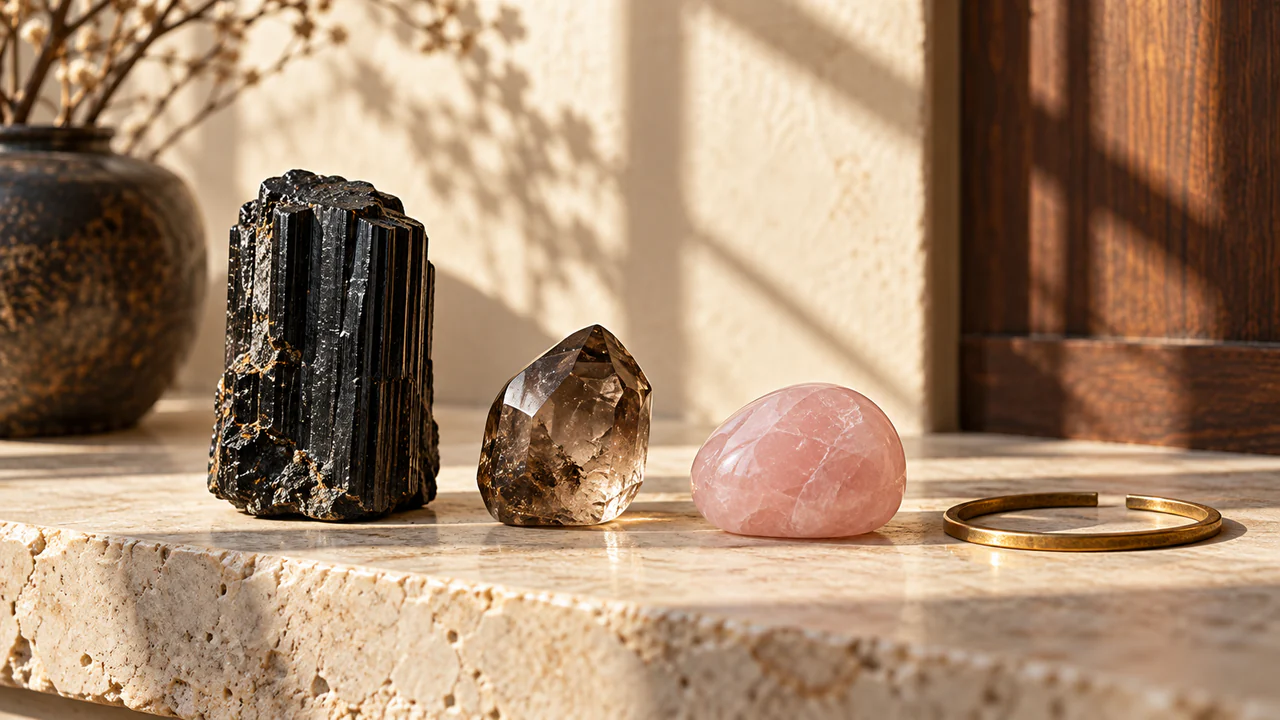
This guide treats the stone as something you can appreciate closely. It explains the difference between a physical property, a personal meaning and a claim that would need scientific testing. The illustrations are generated editorial images, not photographs of specimens offered for sale or evidence for identification.
What amethyst actually is
Amethyst belongs to the quartz family and is recognised by its purple colour. GIA describes it as quartz with a hardness of seven on the Mohs scale. Hardness describes resistance to scratching; it does not mean a pointed cluster or a set stone cannot chip. These are useful facts when choosing a place to display it or deciding whether a ring suits your daily routine. GIA's amethyst overview explains its gemological identity.
Our services
Private 1:1 Tarot Reading with Fardous
Direct, personal, and focused clarity on your most pressing question.
A trade name is not a full description. A seller may use an evocative name for a particular shade, shape or collection. Ask which material it identifies and whether the item in the photograph is the item you will receive. If a listing moves immediately from a romantic name to a high price without explaining the stone, measurements or setting, there is still basic information missing.
Meaning can be personal without becoming a medical promise
Purple amethyst is often associated in contemporary crystal writing with reflection and calm. You can adopt that symbolism without claiming that a crystal changes the course of an illness. A pendant inherited from someone you love may feel reassuring because of the relationship it recalls. A stone on your desk may remind you to close an unnecessary browser tab and finish one thing. Those meanings belong to your use of the object.
The question changes when a seller promises that amethyst treats anxiety, prevents addiction or guarantees sleep. A mineral description does not establish those effects. A feeling of comfort after holding a stone is also not enough to isolate its cause: the quiet setting, expectation, company and time away from a stressful task can all be part of the experience. Enjoy the ritual if it suits you, but do not make the stone responsible for a health outcome.
Our services
Private 1:1 Tarot Reading with Fardous
Direct, personal, and focused clarity on your most pressing question.
Jewellery or a specimen: buy for the way you will use it
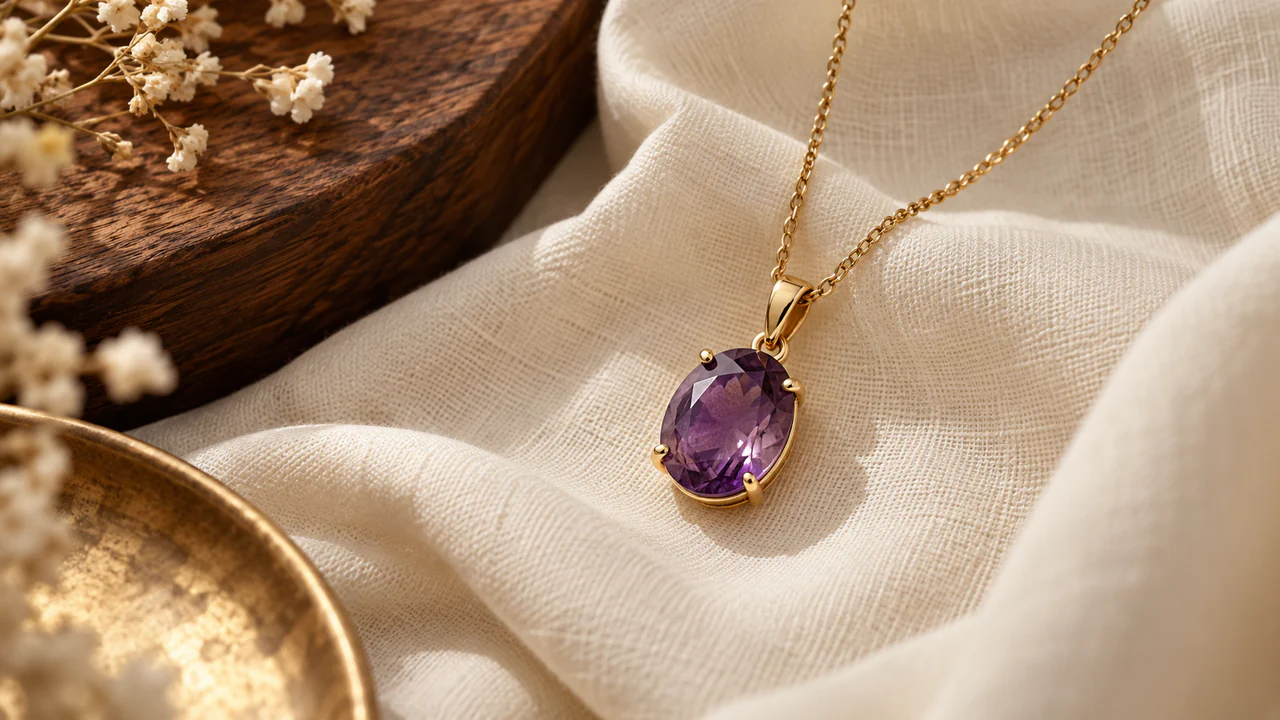
A pendant, a loose faceted stone and a crystal cluster solve different problems. A pendant is worn against clothing and needs a reliable clasp. A ring meets door handles, desks and washing routines. A cluster may look striking on a shelf but have sharp points or an uneven base. Imagine an ordinary Tuesday with the object before imagining its appearance in a carefully lit photograph.
For a gift, comfort often matters more than size. Check the recipient's preference for necklaces or bracelets, the length of the chain and any relevant metal sensitivity. Ask what the setting is made from; the stone's name tells you nothing about the metal. If you cannot check these details discreetly, a small display specimen with clear dimensions may be a more thoughtful choice than jewellery that will remain in its box.
Do not pay for a promise that the largest stone will be the most powerful. Size can change how a piece looks, what it weighs and where it fits. It does not provide a reliable scale of spiritual or therapeutic effectiveness.
Compare colour in ordinary light
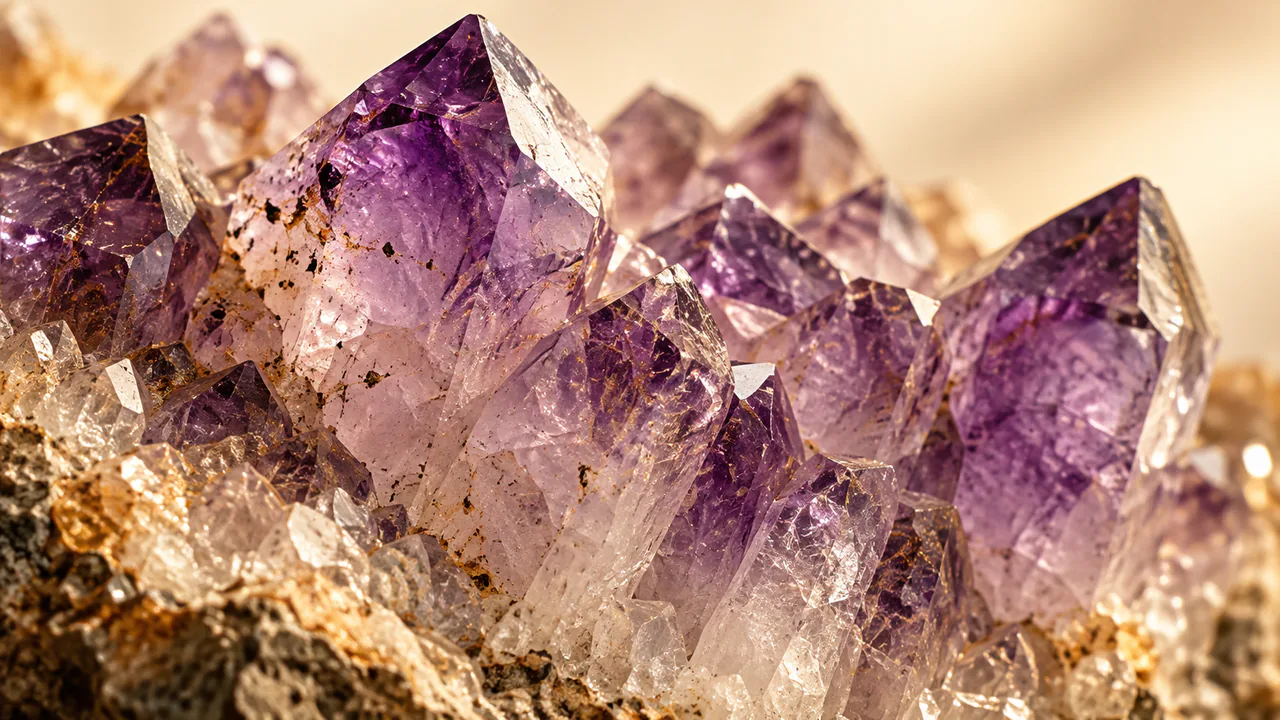
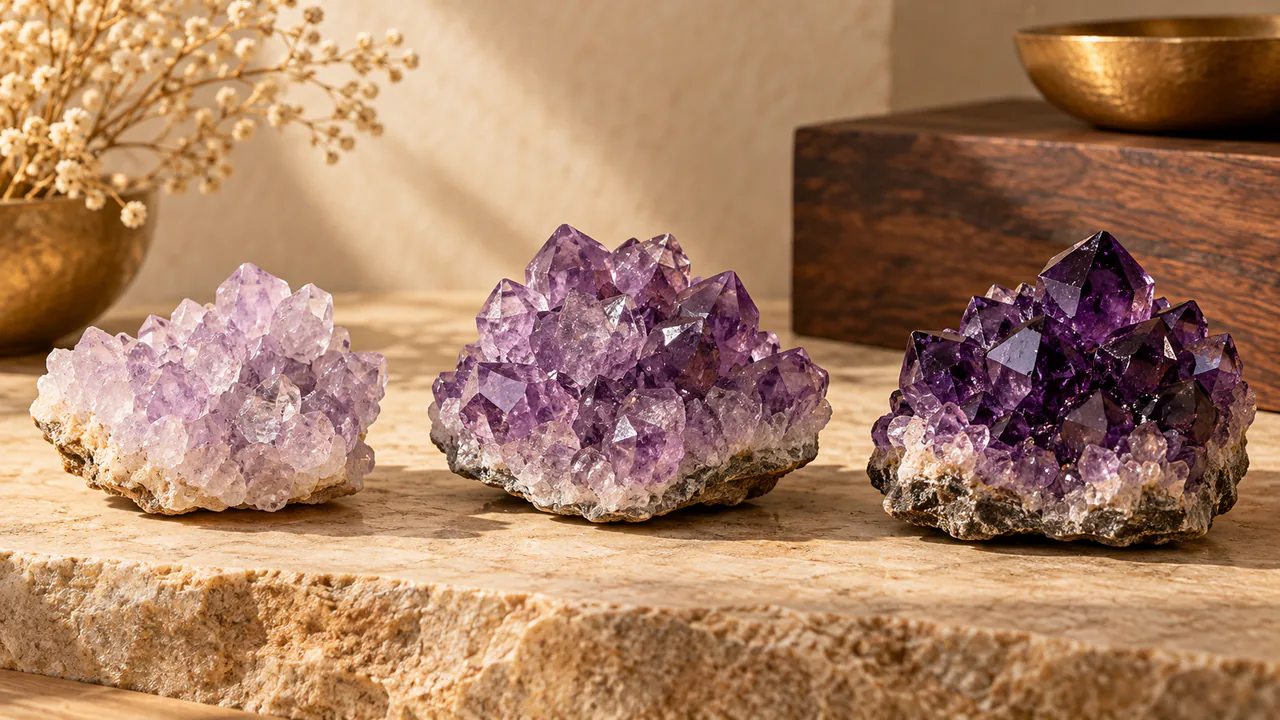
A dramatic photograph can hide the very things you need to compare. Ask for an unfiltered image in neutral light and, when possible, a short video showing the piece as it turns. Notice whether the colour stays pleasing to you from more than one angle. A very dark stone may look almost black in the setting you intend to wear it in; a pale one may suit your clothes and preferences better.
Make comparisons between similar products. A polished pendant with a chain cannot be priced sensibly against a rough cluster by weight alone. Record the dimensions, material description, setting, treatment disclosure, return terms and final delivery cost. Then decide whether the difference between two listings buys something you actually value. A seller's adjective such as premium or rare should prompt a question, not end the comparison.
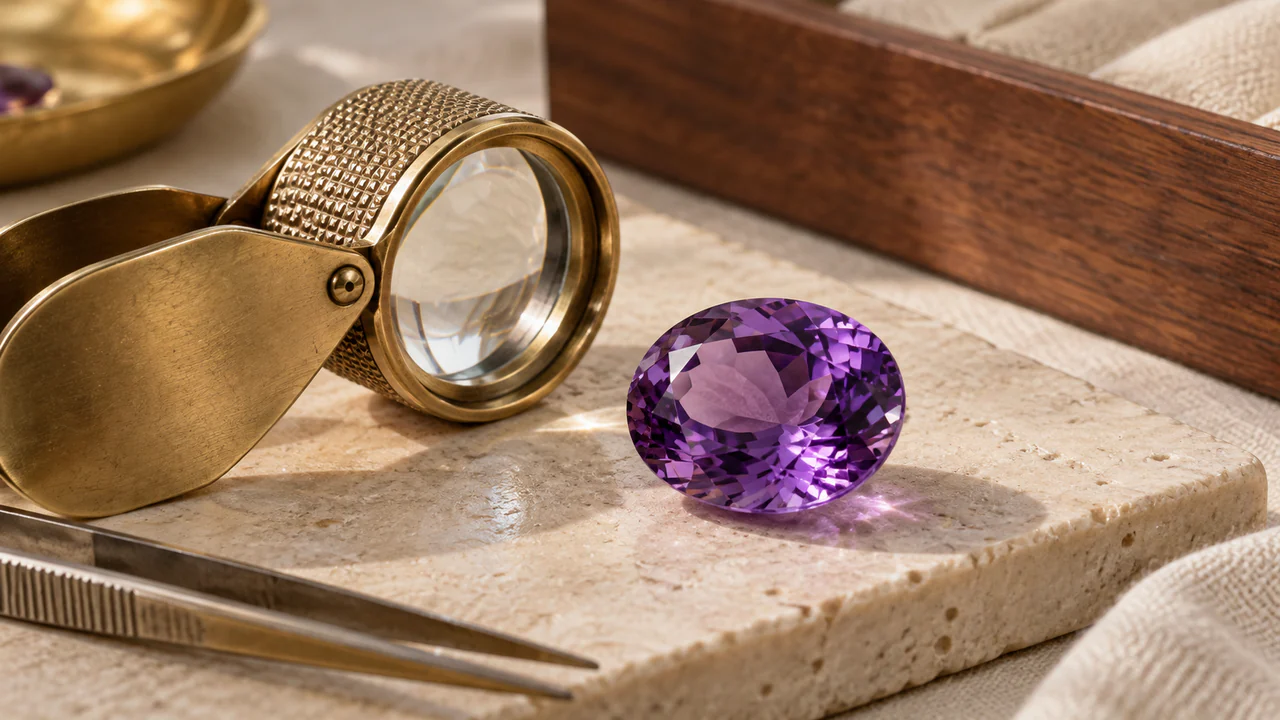
The illustration above shows a colour concept only. It is not a grading chart, a certificate or a way to identify the origin of a stone. A screen, lighting and image processing all affect the appearance of purple.
Our services
Private 1:1 Tarot Reading with Fardous
Direct, personal, and focused clarity on your most pressing question.
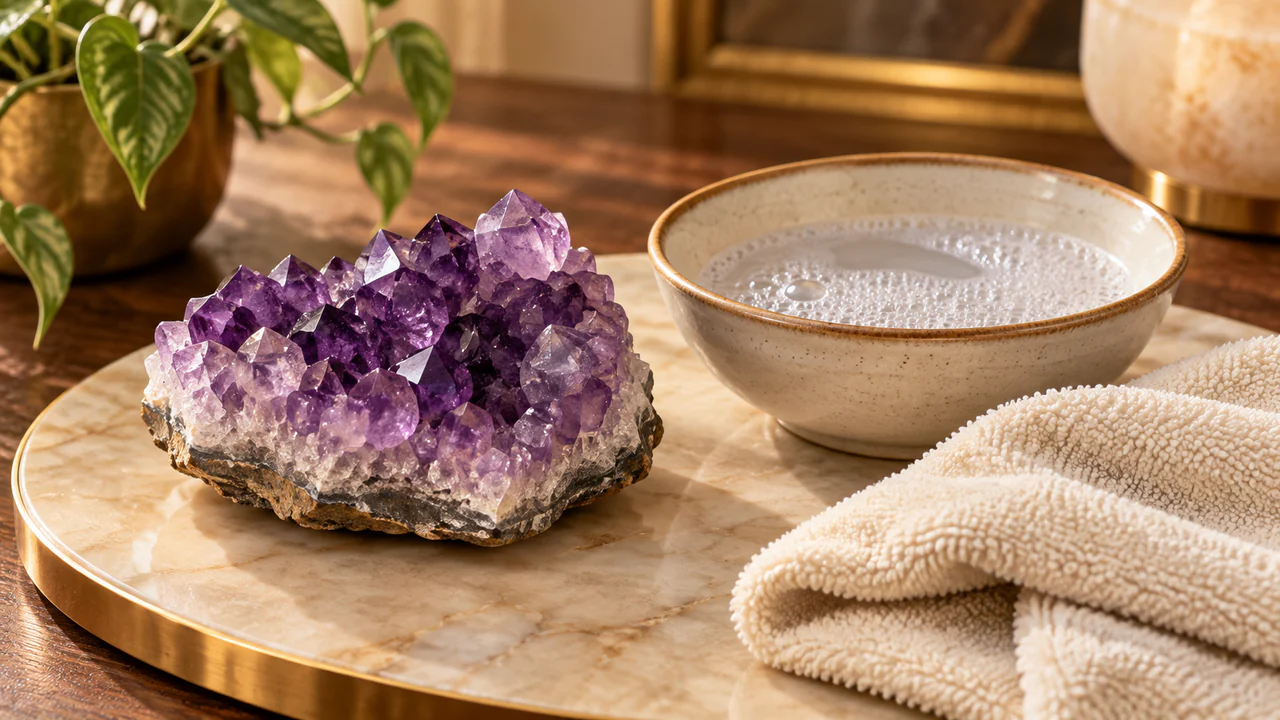
Start with the jeweller's instructions for the complete item. An adhesive, plated surface, fragile inclusion or another stone in the same piece may require more caution than the amethyst alone. GIA recommends warm soapy water for amethyst and cautions against steam and sudden temperature changes. Its care guide also discusses heat and light exposure. Gentle cleaning is a practical maintenance task, not a test of whether the stone has collected negative energy.
Use a contained work area so that a loose item cannot disappear down a sink. If the setting moves, a claw catches on fabric or you see damage, stop and ask a jeweller before cleaning. Avoid adding salt, perfumes or household cleaners simply because an online ritual recommends them. When you do not know the treatment or construction, a careful dry wipe and professional advice are more sensible than an improvised soak.
You can mark the end of a difficult week with an ordinary act of care: put the jewellery away clean, clear the surface around it and decide what you want to do differently tomorrow. The useful action does not depend on making a claim about invisible contamination.
Give it a place where it will not be knocked or forgotten
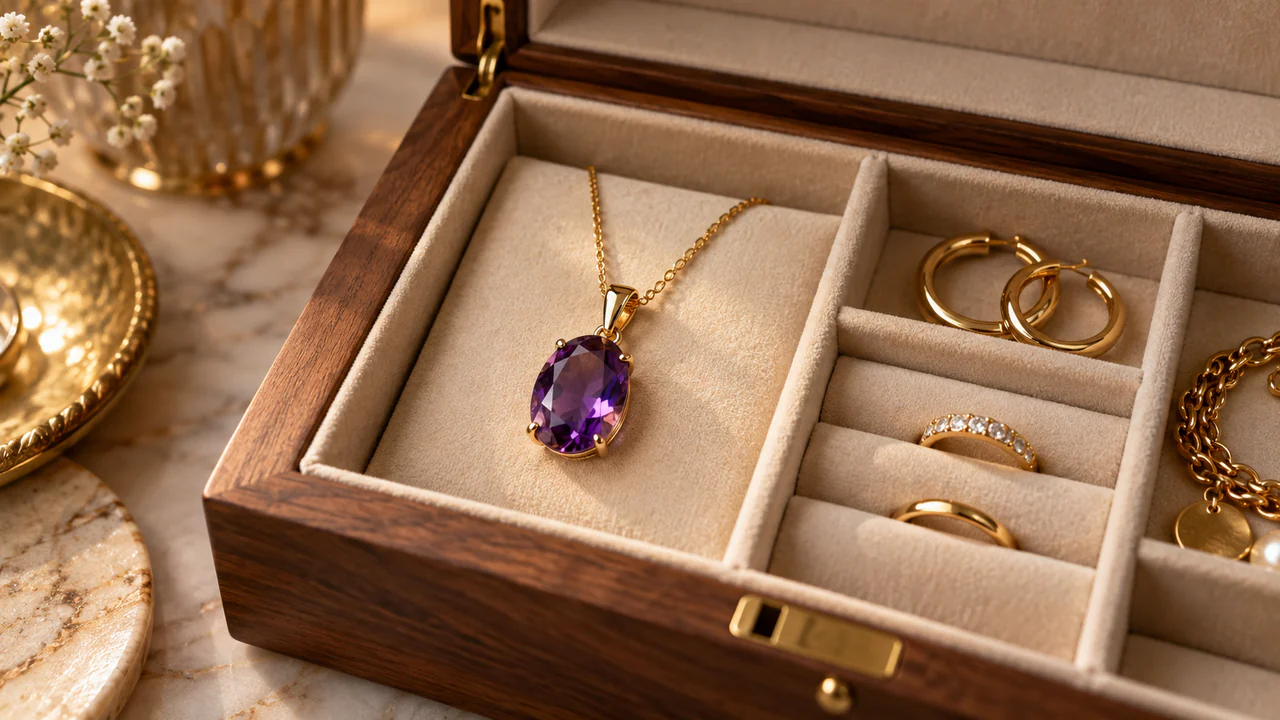
Storage is easy to overlook because it is less exciting than choosing a stone. Give a pendant its own soft compartment rather than dropping it into a drawer with keys and other jewellery. Put a display piece on a stable surface away from a busy edge. If you live with young children or animals, consider small parts, sharp points and whether the object can be reached or swallowed.
A windowsill can be a poor permanent display spot if it receives strong sun or becomes hot. Choose a position where you can see the piece without repeatedly moving it out of the way. This also makes it easier to notice a loose fitting or fresh damage. You do not need an elaborate altar or an expensive storage accessory; a secure, suitable place is enough.
If you attach a spiritual practice to the stone, keep that practice optional. Forgetting to wear a pendant should not become a reason to expect a bad day. An object that was meant to support reflection should not turn into another obligation you are afraid of getting wrong.
Our services
Private 1:1 Tarot Reading with Fardous
Direct, personal, and focused clarity on your most pressing question.
Write your questions before contacting the seller. Is the material natural, laboratory-grown or an imitation? Has it been treated? Are the measurements for the stone or for the whole setting? What documentation accompanies this particular item? What happens if it arrives damaged or differs from its description? A calm, specific answer is more useful than a story about an unusually powerful batch.
For a costly purchase, ask an independent qualified gem professional what level of examination is appropriate. A photograph alone cannot settle every identification question. Do not perform scratch, flame or chemical tests on a piece you own or are considering buying. Such experiments can damage an item without giving you a dependable answer.
Set a spending limit before you read persuasive descriptions. Include postage, possible return costs and any separate chain or setting. If a seller says you must buy immediately to avoid harm, step away from the transaction. That pressure is not a mineral property. Keep the description and receipt so that the purchase remains a clear agreement about an object, not an open-ended promise.
Use symbolism to support an action you control
Suppose you want a calmer start to work. You could place an amethyst near a notebook and make one small agreement with yourself: before opening messages, write the task that deserves your first ten minutes. The stone is a cue. The action is choosing a task. If the stone is absent, the action is still available. This keeps the ritual useful without making your ability to work depend on an object.
If you enjoy symbolic reflection, our free tarot reading tool offers another starting point. Read what tarot can and cannot tell you before using a reading to think through an important situation. A question such as what deserves my attention is more workable than asking a stone or a card to certify another person's motives. Neither can establish that somebody is harming you spiritually.
You can also watch Fardous Nashaat on YouTube and decide which ideas are worth reflecting on. Treat any symbolic interpretation as an invitation to think, not an instruction to spend money, stop treatment or make a decision you cannot easily reverse.
Our services
Private 1:1 Tarot Reading with Fardous
Direct, personal, and focused clarity on your most pressing question.
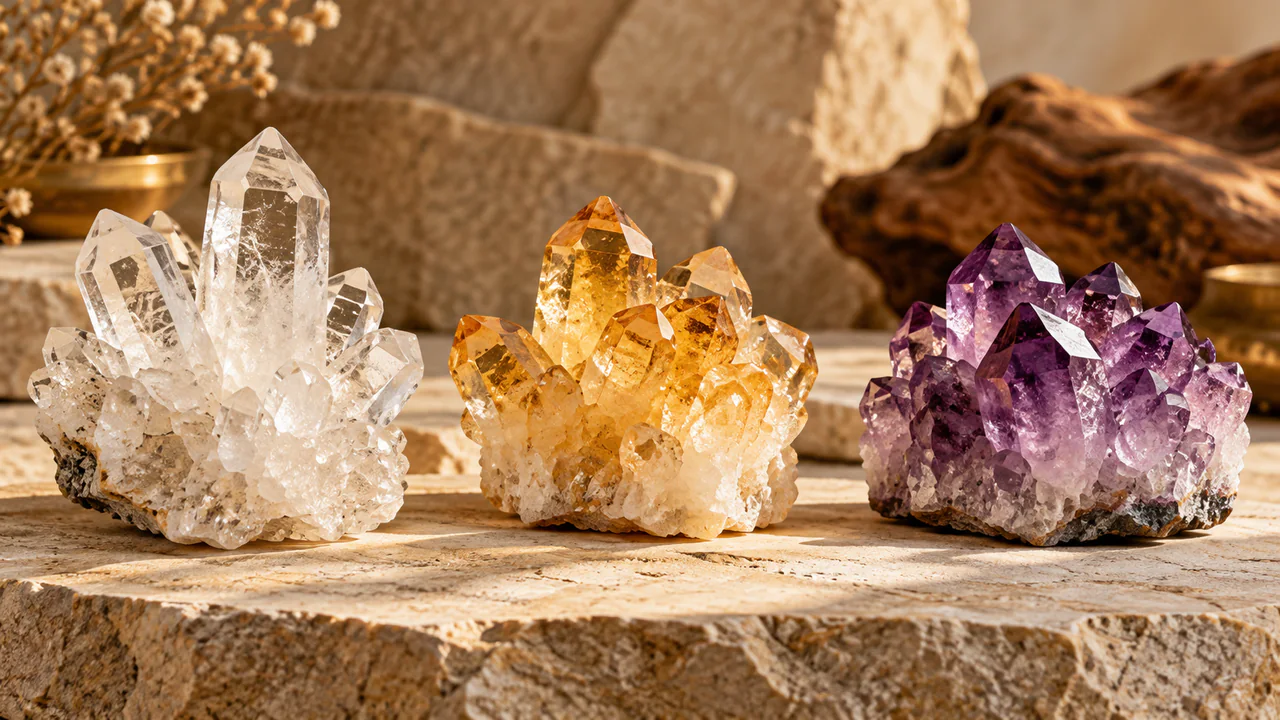
Amethyst, citrine and clear quartz: choose the question first
It is tempting to build a shopping list around a separate stone for every difficulty. Pause before doing that. Are you comparing colours, collecting minerals or hoping for certainty about a relationship? The first two goals can be served by information about actual specimens. The third needs conversation, context and decisions that no collection of stones can make on your behalf.
Our guide to citrine looks at another quartz colour and the questions surrounding its description and care. If your interest is astrological symbolism, the free birth chart calculator can help you explore that language, while reading your birth chart explains its limits. A birth chart is not a mineral identification report and does not establish which stone a person medically needs.
Can I keep amethyst beside my bed?
You can choose it as a decorative object in a secure place. Do not treat its presence as a guarantee of sleep or put small or sharp pieces where they may cause harm. If sleep problems persist, address the problem itself rather than repeatedly buying another crystal.
Must an amethyst be expensive to be meaningful?
No. Personal meaning can come from a gift, a memory, a colour or a habit you choose. A higher price is not proof of greater protection. Buy a description you understand and a piece you can comfortably afford.
What is a sensible first purchase?
A modest, clearly described piece with suitable care instructions and fair return terms is a reasonable starting point. Keep your expectations concrete: enjoy its appearance, learn about the material and use it as a reminder only if that adds something to your day. You can value the stone without asking it to do what the evidence does not establish.
The short version
•Amethyst is purple quartz; its symbolism is a separate question from its mineral identity.
•Choose for beauty, wearability and a clear description, not promised healing.
•Ask about treatments and use gentle care suited to the whole piece.